If you spend any time routing wood through a planer, spraying lacquer in a finishing booth, or sanding between coats of waterborne poly, you are putting things in your lungs that do not belong there. A reusable respirator is a rubber or silicone half-mask you wear over your nose and mouth that holds replaceable cartridges — the filter elements that trap particles or neutralize chemical vapors before the air reaches you. Unlike a disposable dust mask (the kind that looks like a paper cup strapped to your face), a quality reusable respirator creates an actual seal against your skin, costs far less per hour of protection once you factor in cartridge life, and can be dialed in for exactly the hazard in front of you. This guide will walk you through which cartridges do what, which masks are earning consistent trust from woodworkers and finishing professionals, and — critically — how to know whether a given mask will actually seal on your face.
Why “P100” and “OV” Are Not the Same Thing (And Why You Often Need Both)
Here is where a lot of people make an expensive mistake: they buy a respirator marketed for woodworking, load it with particulate filters only, and then spend six hours spraying lacquer wondering why they have a headache.
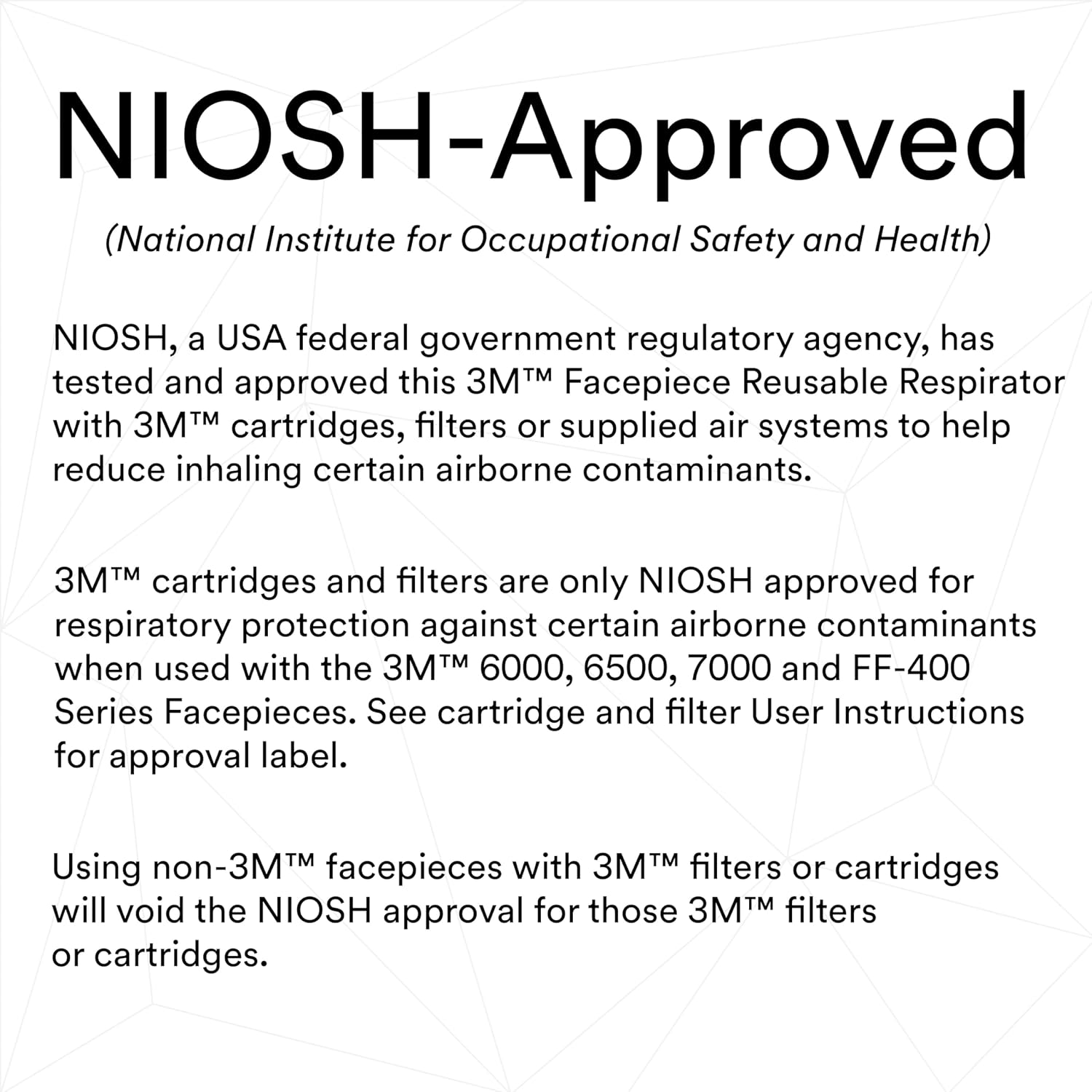
P100 is a NIOSH filter efficiency rating. NIOSH — the National Institute for Occupational Safety and Health — certifies respirator cartridges and defines the letter-number codes on them. The “P” means oil-proof (safe around oil-based mists and aerosols), and “100” means the filter removes at least 99.97% of airborne particles — the highest filtration efficiency in the NIOSH system. Per NIOSH Publication No. 96-101, “NIOSH Guide to the Selection and Use of Particulate Respirators,” a P100 cartridge will handle wood dust, MDF dust, silica from sanding, and most fine particulates extremely well.
OV stands for Organic Vapor. This is a completely separate layer of protection — a bed of activated carbon inside the cartridge that adsorbs (captures by chemical bonding) solvent vapors like those from lacquers, stains, contact cements, polyurethane, and oil-based finishes. OV cartridges work by chemical absorption, not mechanical filtration. They do not block particles particularly well on their own.
The combination you want in a finishing shop is OV/P100 — a cartridge (or cartridge-and-prefilter stack) that handles both. These are widely available as single integrated cartridges or as P100 particulate filters that snap over an OV cartridge body.
A quick standard to know: NIOSH certifies cartridges under 42 CFR Part 84. When you see “NIOSH Approved” and a TC number on a cartridge package, that TC number is traceable to the NIOSH Certified Equipment List (CEL) — the agency’s published database of every approved respirator and cartridge. If you don’t see a TC number, the cartridge has not been independently tested and certified.
The Masks That Actually Seal: Model-by-Model Tradeoffs
A cartridge is only as good as the mask it seals to your face. Here is where the real decision lives. The market for professional half-mask respirators consolidates around a handful of platforms, and each has distinct fit geometry.
3M 6500 Series (6501, 6502, 6503)
The 6500 Series is probably the most widely specified half-mask in North American woodworking and finishing shops. It comes in three sizes (small/medium/large), uses 3M’s 6000-series cartridges (including the 60926 OV/P100 combination cartridge), and is built on a Cool Flow valve that meaningfully reduces heat buildup during long finishing sessions.
Based on published specifications, the 6500 uses a proprietary bayonet-style cartridge mount — meaning you are in the 3M cartridge ecosystem for the life of the mask. Owners across long-run reviews consistently highlight the soft, flangeless face seal as a strong performer on a wide range of face shapes, including those with higher cheekbones. The medium (6502) fits the broadest range of faces and is the logical starting point.
Facial hair caveat: Like every half-mask, the 6500 cannot achieve a proper seal over a beard. OSHA’s Respiratory Protection Standard (29 CFR 1910.134) is unambiguous: a respirator that relies on a face seal must not be worn when facial hair passes between the sealing surface and the face. A few days’ stubble is typically enough to break the seal.
Price tier: The mask body runs roughly $20–$35. OV/P100 cartridges (sold in pairs) run $15–$25 per pair.
Honeywell North 7700 Series
The 7700 Series is the professional-grade alternative that finishing specialists frequently favor for extended wear. The silicone facepiece is notably softer than many competitors, and reviewers in trade-oriented discussions consistently flag reduced fatigue on four-plus hour sessions — relevant if you are spraying a full kitchen cabinet run or doing bodywork.
The 7700 uses North’s bayonet system (75FFP100L cartridges for OV/P100 combined protection). One meaningful difference from the 3M 6500: the 7700’s low-profile design reduces chin-to-mask depth, which helps wearers whose face shape causes the bottom of a standard half-mask to push uncomfortably into the chest when looking down — a common complaint among cabinet installers spending time face-up under upper cabinets.
Price tier: Mask body runs $60–$90. Cartridges are comparably priced to 3M’s.
3M 6700/6800 Series (the older platform)
You will still encounter the 3M 6800 series recommended in older guides and forum threads. It remains NIOSH-approved and takes the same 6000-series cartridges as the 6500. The difference is fit geometry: the 6800 has a rounder, deeper facepiece that fits some faces — particularly wider, flatter faces — better than the 6500’s more contoured design. If the 6500 medium gaps at the chin or bridges oddly across your nose, the 6800 is worth trying before concluding that 3M doesn’t fit your face at all.
MSA Advantage 200 LS
Less frequently discussed in finishing contexts but worth naming: the MSA Advantage 200 LS uses a low-silhouette design and features MSA’s Sure-Seal technology — a design intent of maintaining seal under jaw movement. It is used in environments with significant head movement and voice communication demands. For woodworkers who find standard masks dislodging during repetitive work, published specs and installer reviews suggest this is a legitimate option to compare.
By the Numbers
| Mask | Cartridge System | Body Price (est. 2026) | Long-Session Comfort | Fit Profile |
|---|---|---|---|---|
| 3M 6502 (6500 Series) | 3M 6000 bayonet | $20–$35 | Good; Cool Flow valve | Wide range; contoured |
| Honeywell North 7700 Series | North bayonet | $60–$90 | Very good; soft silicone | Reduced chin depth |
| 3M 6800 Series | 3M 6000 bayonet | $25–$40 | Good | Rounder, wider fit |
| MSA Advantage 200 LS | MSA bayonet | $35–$55 | Good; low-profile | Active-use optimized |
Cartridge prices are per pair for OV/P100 combined cartridges. Body prices are single-unit MSRP in the mid-2026 market.
Fit Testing: The Step That Most Shops Skip
Buying a good mask is step one. Knowing whether it actually seals on your face is step two, and most small shops never do it formally.
OSHA 1910.134 requires fit testing for any employer-mandated respirator program. For independent shop owners and serious DIYers, formal fit testing — either qualitative (a smell or taste test using a challenge agent like saccharin solution) or quantitative (a machine that measures particle counts inside and outside the mask simultaneously) — is technically optional. But it is genuinely useful.
The low-cost entry point: most safety equipment distributors and some fire departments offer qualitative fit testing for $20–$60 per person. Some industrial hygiene consultants will come to a shop and test a crew in an afternoon for a reasonable flat fee. NIOSH’s Hazard Review on occupational wood dust exposure (Publication No. 2016-112) underscores that even well-fitted respirators deliver significantly less protection than their rated efficiency when worn improperly — which is almost always a fit issue.
The practical DIY sanity check that does not replace a fit test: the negative pressure check. Cover the cartridges with your palms, inhale slightly, and hold. The mask should draw in toward your face and stay there for several seconds without air leaking in around the seal. If it collapses and rebounds immediately at any point, you have a leak — usually at the nose bridge or chin.
Glasses compatibility: Most half-masks are designed with eyewear in mind — the nose bridge sits below the eye socket and should not conflict with safety glasses or goggles. However, temple arms from full-wrap safety glasses (like the Uvex Pheos CX2 or Wiley X frames) can occasionally break the seal at the cheekbone. In those cases, switching to a goggle with a smooth perimeter — or a frameless safety lens — resolves the conflict without compromising either protection level.
Cartridge Change Intervals: The Question Nobody Wants to Answer Directly
How long does an OV cartridge last? The honest answer: it depends on exposure concentration, humidity, temperature, and how often you use it — and there is no color-change indicator on standard OV cartridges that tells you when they are saturated.
The published industry guidance from OSHA and NIOSH supports using a change schedule based on your specific exposure, calculated via OSHA’s cartridge change schedule methodology (described in 1910.134 Appendix B). For most finishing work in a moderately ventilated shop, this works out to replacing OV cartridges after eight to sixteen hours of actual use for typical lacquer and stain solvents — not calendar time on the shelf.
P100 particulate filters should be replaced when breathing resistance increases noticeably or when they become physically damaged or wet. A pair of P100 cartridges used in a dusty woodshop four hours a day, five days a week might last two to four weeks before airflow resistance becomes a real issue.
Cost-per-use math: a $20 pair of OV/P100 cartridges covering 12 hours of use works out to roughly $1.67 per hour of protection. That is not a rounding error in your consumables budget.
The Decision Rule
If you are doing woodworking only — no finishing, no solvents — a P100 half-mask (3M 6502 or equivalent) is the right tool. You do not need OV capability, and P100 particulate filtration at 99.97% efficiency is the appropriate response to fine wood dust, which NIOSH identifies as a carcinogen risk for hardwood species in its occupational exposure publications.
If you are doing any finishing work — lacquers, stains, oil-based products, contact cement, conversion varnishes — you need OV/P100 combination cartridges, full stop. The particulate filter handles overspray aerosol; the OV carbon bed handles solvent vapor. Running P100 alone while spraying is not a shortcut; it is a gap.
If you do both and wear a respirator more than two hours a day, the Honeywell North 7700 is the upgrade worth pricing. Owners and long-run reviewers consistently report less end-of-day fatigue, and at $60–$90 for the mask body, the cost is recovered quickly versus single-use disposables in a busy shop.
If you are just getting started and want to validate fit before committing to a specific platform: buy the 3M 6502 medium first. It fits the broadest range of faces, uses widely available cartridges, and if it does not fit your face well, you will know quickly and can use the experience to make a smarter second choice.
The right respirator is the one that seals on your actual face, carries the right cartridges for your actual hazards, and is comfortable enough that you actually wear it for the whole session. On those three criteria, this is a decision worth getting right.