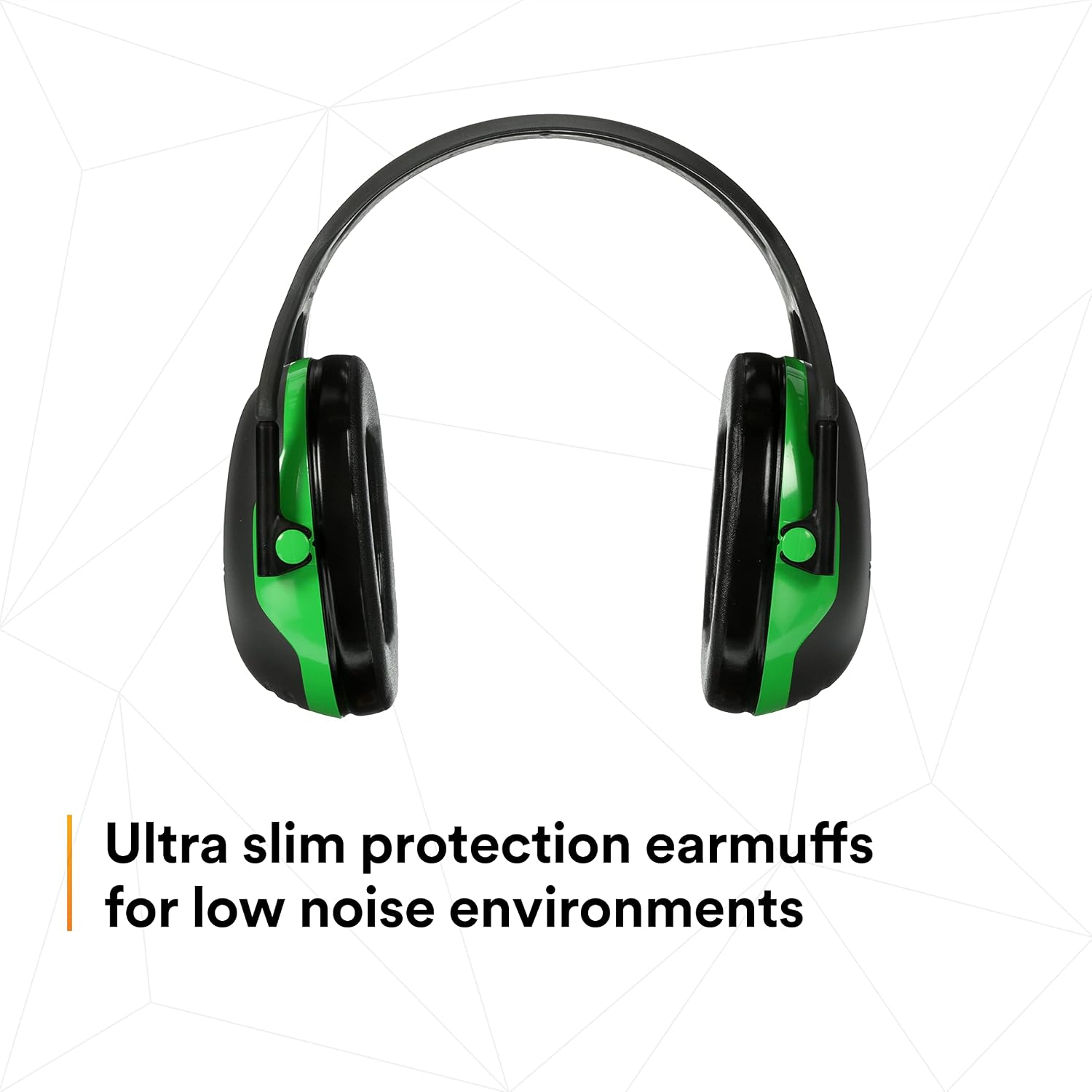
If you’ve ever stood next to a running table saw, angle grinder, or pneumatic nailer, you already know that loud tools hurt more than just your concentration — prolonged exposure to high noise levels causes permanent hearing loss, the kind that doesn’t announce itself until years later. Hearing protectors like earmuffs work by physically blocking sound waves before they reach your eardrum. The most important number on the box is the NRR, or Noise Reduction Rating — a single-number score, measured in decibels (dB), that tells you how much sound the device blocks under controlled lab conditions. A higher NRR means more blocking. The 3M PELTOR X Series is one of the most specified earmuff lines in professional workshops, construction sites, and fabrication shops precisely because it offers a clear ladder of protection levels — from moderate noise environments all the way up to the loudest industrial settings — at price points ranging from about $15 to $50. This guide breaks down every model in the X Series, maps each to real noise environments, and gives you the plain math and decision rules to stop guessing.
| EDITOR'S PICK[3M PELTOR Ear Muff Hearing Prot](https://www.amazon.com/dp/B00CPCHBCQ?tag=greenflower20-20)… | Mid-tier[3M PELTOR Optime 98 Earmuffs H9A](https://www.amazon.com/dp/B0017YLTAI?tag=greenflower20-20) | Budget pick3M PELTOR Hearing Protection Op… | |
|---|---|---|---|
| NRR Rating | 21 dB | — | — |
| Style | Over the head | Over-the-head | Behind the head |
| Material | — | — | Stainless Steel |
| Compatibility | — | — | E-A-Rfit Compatible |
| Pack size | — | 1 Count (Pack of 1) | — |
| Price | $42.17 | $25.94 | $24.21 |
| See on Amazon → | See on Amazon → | See on Amazon → |
What the NRR Number Actually Means in Practice
Here’s where most buyers trip up: the NRR printed on the package is a lab number, not a real-world number. The test is standardized under ANSI/ASA S3.19-1974, “Method for the Measurement of Real-Ear Protection of Hearing Protectors and Physical Attenuation of Earmuffs”, which means human subjects wear the device in a perfectly controlled acoustic chamber. Real workplaces are messier. Hair, glasses temples, and a jaw that moves while you’re talking all reduce how well earcups seal against your head.
Both OSHA (the federal Occupational Safety and Health Administration, which sets legal workplace noise limits under 29 CFR 1910.95) and NIOSH (the National Institute for Occupational Safety and Health) recommend applying a derating factor to the labeled NRR to get a realistic estimate of on-the-job protection.
The two most common derating methods:
- OSHA method (50% derating): Subtract 7 from the NRR, then divide by 2. Example: NRR 31 → (31 − 7) ÷ 2 = 12 dB real-world reduction
- NIOSH method (25% derating for earmuffs): Multiply NRR by 0.75, then subtract 7, then divide by 2. Example: NRR 31 → (31 × 0.75 − 7) ÷ 2 = 8.1 dB real-world reduction
NIOSH’s guidance document “Occupational Noise Exposure: Revised Criteria 1998” (NIOSH Publication No. 98-126) explicitly recommends the more conservative derating because controlled-lab scores consistently overestimate field performance. Safety+Health Magazine’s 2023 article “Hearing Protection: Selecting the Right Device for the Job” echoes this, noting that poor fit is the single largest contributor to protection shortfall in real workplaces.
The takeaway: Don’t buy an earmuff based on the raw NRR alone. Derate first, then check whether the derated number gets you below OSHA’s action level of 85 dB for an 8-hour shift.
The PELTOR X Series Lineup, Model by Model
3M built the X Series around a common chassis concept — a foam-filled cup with a stainless-steel headband — but each tier differs in cup depth, foam density, and resulting attenuation. According to 3M Personal Safety Division PELTOR X Series Product Specification Sheets (2024), the full lineup breaks down as follows:
| Model | NRR | Derated dB (OSHA method) | Best-fit environment | Street price (2026) |
|---|---|---|---|---|
| X1 | 22 | 7.5 dB | Light assembly, low-noise power tools | ~$15 |
| X2 | 24 | 8.5 dB | Woodworking shops, moderate HVAC | ~$18 |
| X3 | 28 | 10.5 dB | Circular saws, routers, nailers | ~$22 |
| X4 | 27 | 10.0 dB | Similar to X3; slimmer profile for tight quarters | ~$22 |
| X5 | 31 | 12.0 dB | Grinding, jackhammers, loud industrial | ~$30–$35 |
By the numbers: OSHA’s permissible exposure limit (PEL) is 90 dB averaged over 8 hours; its action level — the point at which hearing conservation programs must start — is 85 dB. A running angle grinder at arm’s length measures roughly 100 dB. To get from 100 dB down to 85 dB, you need 15 dB of real-world attenuation. At the OSHA-derated figure, even the X5’s 12 dB isn’t quite enough on its own — which is the argument for dual protection (earmuffs over foam earplugs), a combination NIOSH recommends for environments above 100 dB per NIOSH Publication No. 98-126.
X1 and X2: Entry-Level Protection for Lower-Noise Environments
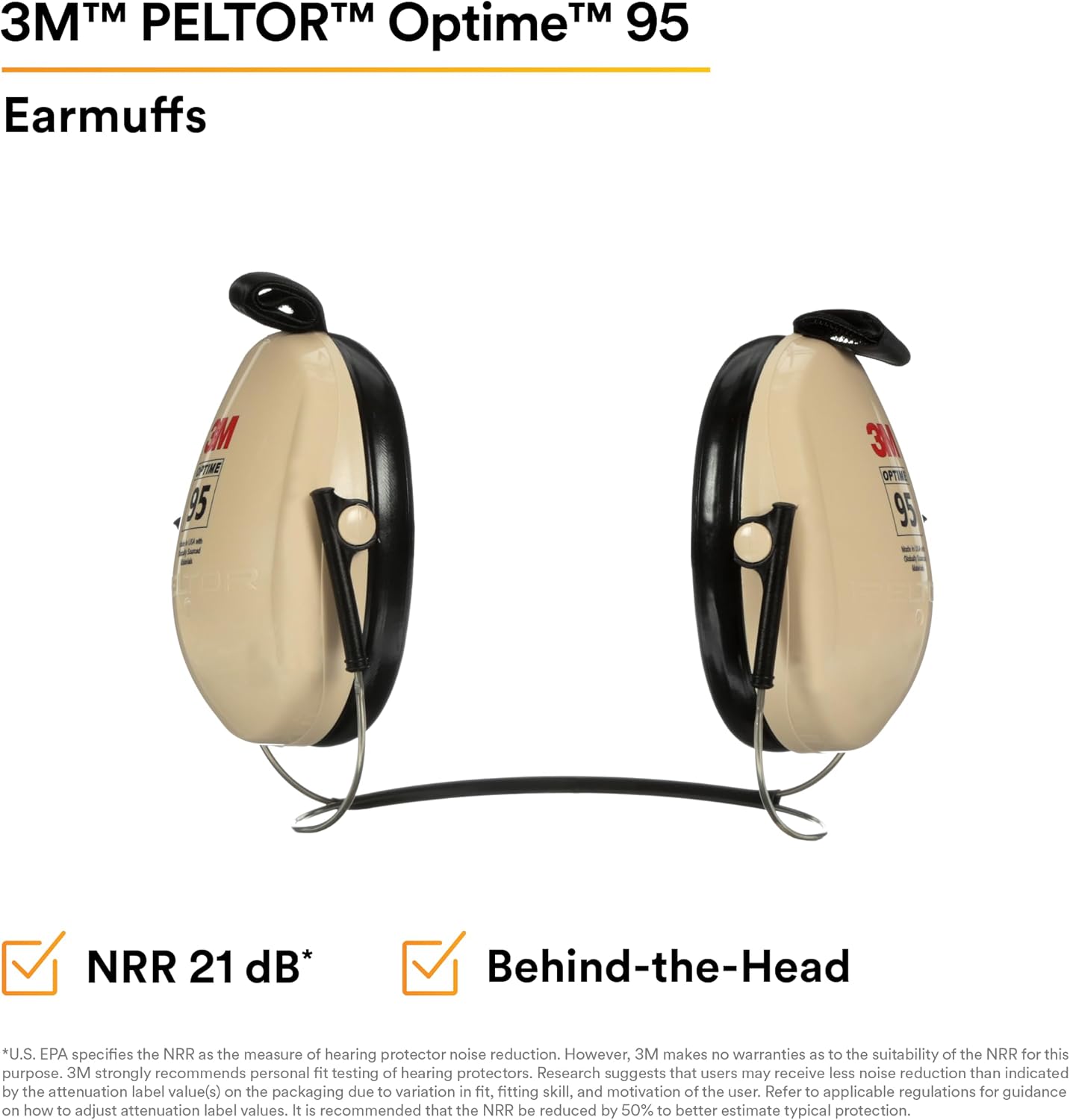
3M
$24.21
In stock on Amazon
Check price on AmazonThe X1 (NRR 22) and X2 (NRR 24) are legitimately useful hearing protectors, not token products. They’re appropriate for noise environments that hover in the 85–92 dB range: light bench work, drill press operation, moderate HVAC maintenance, and mowing. Their lighter cup weight — noticeably less fatigue during all-day wear compared to the X5 — makes them practical for tasks where you’re putting earmuffs on and taking them off repeatedly throughout the day.
The honest limitation: if your shop runs a shaper, planer, or router table regularly, you’re likely pushing past 95 dB, and the X1/X2’s derated protection leaves a thin margin. Safety+Health Magazine’s 2023 hearing protection review specifically warns against using entry-level NRR devices as primary protection in environments that routinely spike above 92 dB. For those environments, treat these as “better-than-nothing” spares or secondary units, not your primary protection.
Best for: Operators in light-assembly environments, occasional power-tool users, and crew members who need a secondary pair kept at a shared workstation.
3M
$24.21
In stock on Amazon
Check price on AmazonX3 and X4: The Shop-Floor Sweet Spot for Most Woodworkers and Contractors
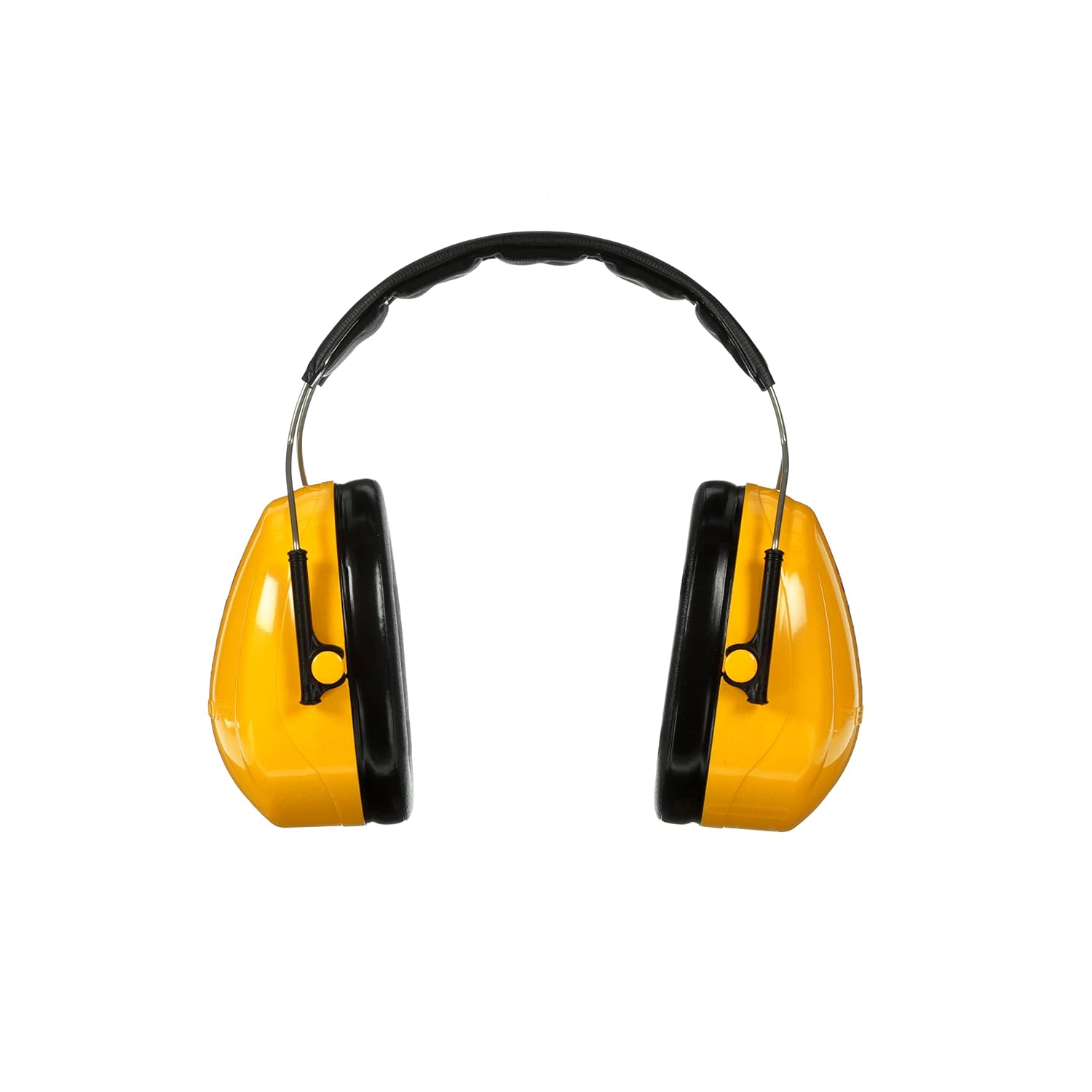
3M
$25.94
In stock on Amazon
Check price on AmazonMost intermediate workshop owners will land here, and for good reason. The X3 (NRR 28) and X4 (NRR 27) cover the most common woodworking and general construction noise range — circular saws, jigsaws, routers, nailers, and reciprocating saws typically measure 95–103 dB at the operator’s ear position.
The difference between the X3 and X4 is profile, not protection level. The X4 runs a lower-profile, slimmer cup designed to clear a hard hat brim and reduce snagging on shoulder straps — which matters enormously if you’re wearing a full-brim hard hat simultaneously. According to 3M Personal Safety Division PELTOR X Series Product Specification Sheets (2024), the X4’s cup geometry is intentionally optimized for hard-hat compatibility. If you’re working at height or on a regulated site that mandates head protection, the X4 earns its keep. If you’re in a stand-alone shop environment without a hard hat requirement, the X3’s slightly deeper cup gives marginally better seal consistency for users with larger ear canals.
Fit note for glasses wearers: Both the X3 and X4 struggle where all over-ear earmuffs struggle — temples from safety spectacles interrupt the foam seal. ISHN’s 2022 article “Understanding Noise Reduction Ratings and Real-World Attenuation” specifically identifies this failure mode, noting that even a small gap at the seal can reduce effective attenuation by 5–10 dB. If you wear prescription glasses or safety specs with thick temples, consider pairing with thin-wire safety glasses or moving to high-NRR foam earplugs for the loudest tasks.
Best for: General woodworking shops, residential construction sites, and any operator who needs reliable mid-range protection with hard-hat compatibility options.
3M
$25.94
In stock on Amazon
Check price on AmazonX5: Maximum Attenuation for High-Intensity Industrial Environments
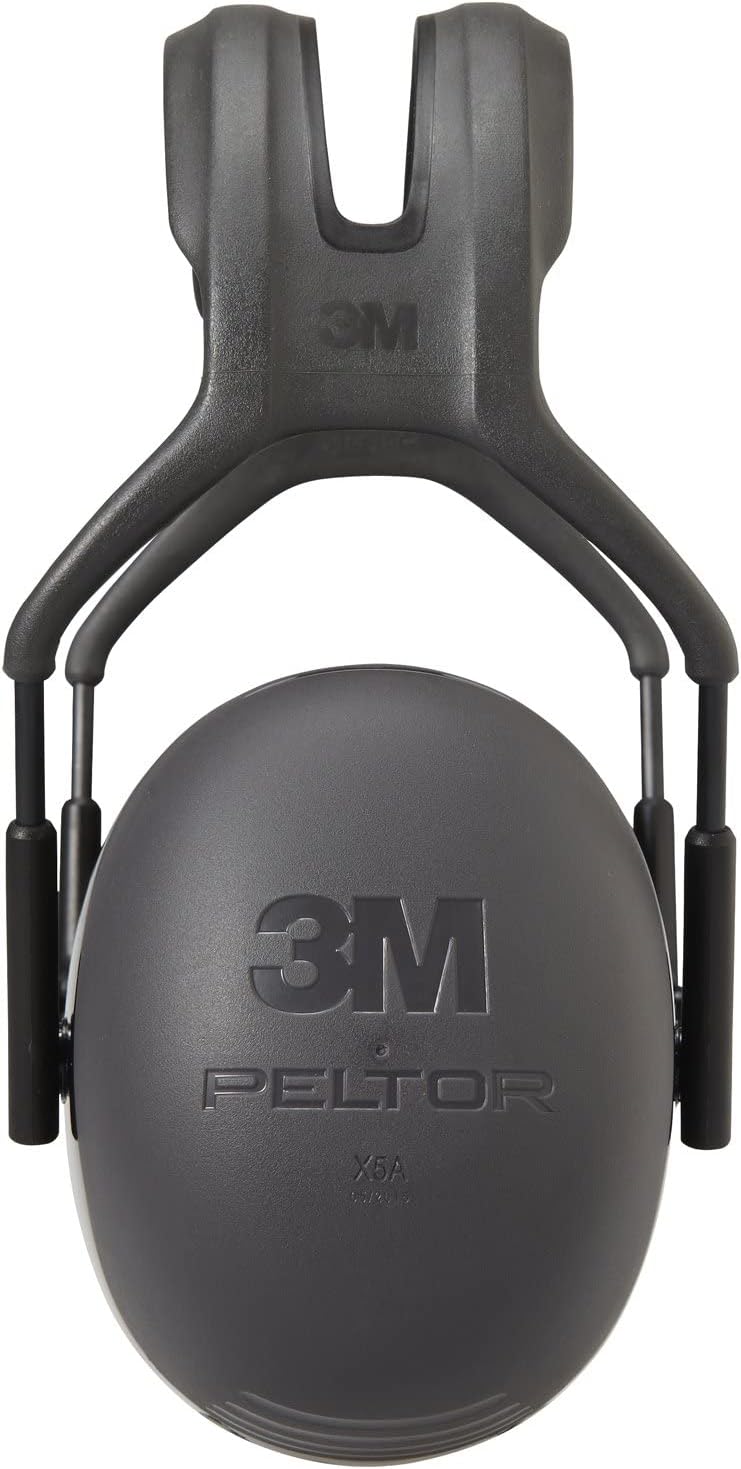
3M
$42.17
In stock on Amazon
Check price on AmazonThe X5 (NRR 31) is 3M’s top-of-ladder model in the X Series, and it represents a genuine step up in protection for operators working around sustained high-noise machinery. Grinding operations, concrete cutting, jackhammering, and shot-blasting regularly exceed 100 dB — sometimes touching 110–115 dB at close range.
The X5 is noticeably heavier than lower models in the line, and the clamping force is stronger to achieve the better seal that produces higher attenuation. Both are trade-offs, not defects. For a two-hour grinding session, the added weight and pressure are manageable; for an 8-hour day of intermittent noise, many operators report fatigue by mid-afternoon. This is the realistic ceiling of the X Series before you’d want to consider custom-molded or canal-based solutions for all-day use.
According to 3M Personal Safety Division PELTOR X Series Product Specification Sheets (2024), the X5 shows consistent attenuation across frequency bands — which matters because workplace noise is rarely a single frequency. That broad-spectrum performance is part of what justifies its price premium over lower X Series models.
At roughly $30–$35, the X5 sits at a price point where it competes directly with alternatives from Howard Leight and Honeywell. Its NRR 31 rating matches or slightly exceeds most competitors at this price tier.
Best for: Metalworking shops, concrete cutting crews, operators running sustained grinding operations, and any environment where ambient levels regularly exceed 100 dB.
3M
$42.17
In stock on Amazon
Check price on AmazonDual Protection: When One Layer Isn’t Enough
For environments reliably above 100 dB — think metalworking with large angle grinders, indoor target shooting, or extended exposure near large compressors — NIOSH recommends combining earmuffs with foam earplugs inserted underneath. This guidance appears in NIOSH Publication No. 98-126, “Occupational Noise Exposure: Revised Criteria 1998”, which provides a practical rule for estimating combined protection: add 5 dB to the higher-rated device’s NRR when the two are used together — not the full arithmetic sum of both NRRs.
So the X5 (NRR 31) worn over a quality foam earplug (NRR 33) yields an estimated combined real-world attenuation of roughly 16–17 dB by the NIOSH method — enough to pull a 105 dB environment into compliance range for an 8-hour shift.
OSHA’s noise standard, 29 CFR 1910.95, does not specify a formula for combined-protector calculation, but it does require employers to ensure that selected hearing protectors adequately reduce noise exposure to at least the action level. Dual protection is one recognized path to meeting that requirement in extreme-noise environments.
Foam earplugs that pair well under the X Series cups include the 3M 1100 and 1110 series, Moldex Pura-Fit 6800, and Howard Leight Max-1. The X Series’ cup depth — particularly on the X3 and X5 — accommodates a properly inserted earplug without the cup pressing the plug inward and compromising the earplug’s own seal.
The Decision Framework: Matching Model to Environment
Here’s the plain-language decision rule this whole guide builds toward:
-
If your noise environment is below ~92 dB (light power tools, assembly, drill press): the X1 or X2 is sufficient, and the reduced weight will improve all-day compliance. You’ll actually keep them on.
-
If your environment runs 93–100 dB (table saw, router, reciprocating saw, nailers): the X3 is your default pick. If you’re wearing a hard hat simultaneously, go X4 for the slimmer profile.
-
If your environment routinely exceeds 100 dB (sustained grinding, jackhammering, pneumatic impact work): start with the X5, and add foam earplugs beneath for the loudest exposures. At $30–$35, the X5 is not a luxury — it’s a minimum spec for that noise tier.
-
If you wear prescription glasses or thick-temple safety specs: test any X Series model carefully for seal quality. The gap created by temples is one of the most consistent real-world attenuation killers identified in ISHN’s 2022 coverage of hearing protector field performance.
-
If you’re outfitting a crew: the X3 at roughly $22 per unit offers the best protection-per-dollar for general construction and woodworking environments, and the headband adjusts across a wide range of head sizes without fine-tuning at the start of every shift.
One point that both Safety+Health Magazine and ISHN reinforce consistently in their hearing conservation coverage: the best hearing protector is the one workers actually wear. An X5 sitting on the workbench doesn’t outperform an X2 on someone’s head. Comfort and compliance are part of the protection calculation — which is the strongest argument for not always defaulting to the highest NRR in the line when an operator finds the fit or clamping force uncomfortable over a full shift.
The PELTOR X Series isn’t complicated once you know how to read the NRR math and map it to your actual noise level. Run the derating formula, know your dB range, account for fit variables like glasses and hard hats, and the right model selects itself. Your future self — the one who can still hear clearly at 60 — will appreciate the ten minutes it took to make that call deliberately.