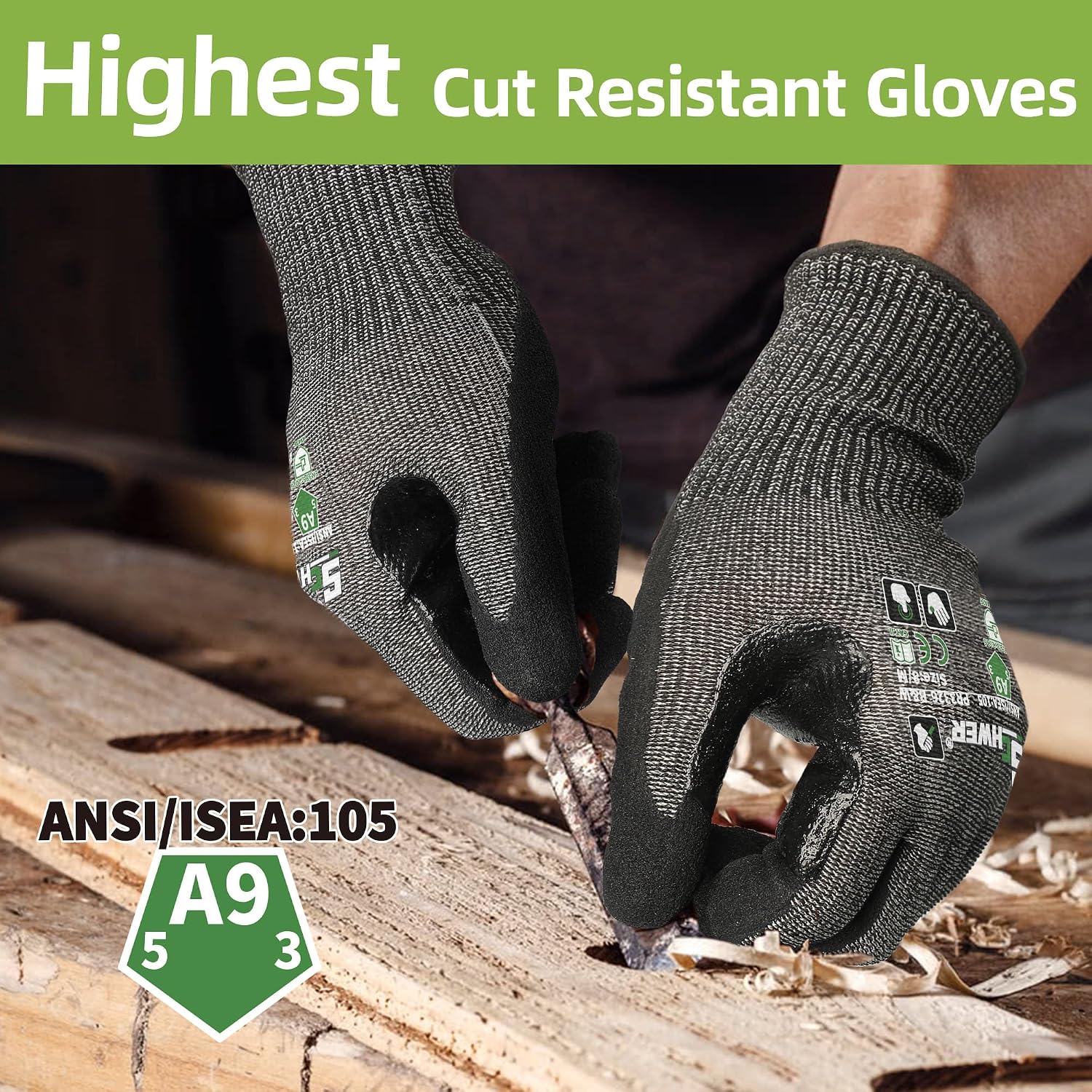
If you’ve ever stood in a work-glove aisle — or scrolled through a distributor catalog — and wondered what “ANSI A4 cut resistant” actually means versus A6 or A2, you’re not alone. Cut resistance refers to how much force a blade needs to slice through a glove material, measured in grams by a standardized machine. The American National Standards Institute (ANSI), the U.S. body that sets voluntary industry standards, and the International Safety Equipment Association (ISEA) jointly publish a nine-level scale — A1 through A9 — that tells you exactly how much cutting force a glove is engineered to withstand. Higher numbers mean more resistance. But “more resistance” isn’t automatically “better for your job.” Overly protective gloves can kill dexterity, trap heat, and cost three times as much as a glove that does the job perfectly. This guide decodes every level, maps each one to the work it actually fits, and gives you a clear decision framework so you’re not over-gloved, under-gloved, or just guessing.
| EDITOR'S PICK[Ironclad Command Impact 360 Cut…](https://www.amazon.com/dp/B08D56CZQ6?tag=greenflower20-20) | Mid-tier[DEX FIT Level 5 Cut Resistant G…](https://www.amazon.com/dp/B0BYN4FY4Z?tag=greenflower20-20) | Budget pick[Schwer A4 AIR-SKIN Cut Resistan…](https://www.amazon.com/dp/B09QKHMPL1?tag=greenflower20-20) | |
|---|---|---|---|
| Cut Level | A6 | A5 | A4 |
| Material | — | — | AIR-SKIN |
| Impact Protect | ✓ | ✗ | ✗ |
| Machine Washable | ✓ | ✓ | — |
| Price | $28.19 | $12.49 | $9.99 |
| See on Amazon → | See on Amazon → | See on Amazon → |
What ANSI/ISEA 105 Actually Measures — and Why the 2016 Update Changed Everything
Before 2016, glove cut ratings used a different scale: A1 through A5, loosely correlated to an older European test method. The problem was that materials science had outpaced the standard — HPPE (high-performance polyethylene), engineered-fiber blends, and steel-core yarns were delivering performance the old A5 ceiling couldn’t differentiate. A glove that barely cleared A5 and a glove that shrugged off three times as much cutting force were both labeled “A5.” Buyers had no way to tell them apart.
The ANSI/ISEA 105-2016 revision fixed this. It adopted the TDM-100 machine test method, which draws a blade across a glove sample under controlled load and measures — in grams — the force required to cut through. The result is a clean nine-tier scale:
| Level | Cut Force Required | Common Description |
|---|---|---|
| A1 | ≥ 200g | Minimal cut resistance |
| A2 | ≥ 500g | Light cut resistance |
| A3 | ≥ 1,000g | Light-moderate |
| A4 | ≥ 1,500g | Moderate |
| A5 | ≥ 2,200g | High |
| A6 | ≥ 3,000g | Higher |
| A7 | ≥ 4,000g | Very high |
| A8 | ≥ 5,000g | Extreme |
| A9 | ≥ 6,000g | Maximum available |
Per ANSI/ISEA 105-2016, every glove sold to this standard must display the ANSI cut level icon — a hand symbol with the letter and number — directly on the product. If that icon isn’t there, the glove isn’t certified, regardless of what the marketing copy says. Safety+Health Magazine’s overview of cut-resistance ratings reinforces this point: buyer beware of gloves labeled “cut resistant” without the ANSI mark. “Cut resistant” alone is a marketing phrase; the ANSI icon is the measurable commitment.
Mapping Each Level to Real Work — the Decision Framework
This is where most glove guides go wrong: they list the levels but leave you to figure out the application match. Let’s do that work here. Think of the scale in four practical bands.
Band 1: A1–A2 — Light Handling, Control Work, Dexterity-First Jobs
A1 and A2 gloves are typically thin-knit HPPE or nylon shells. They won’t stop a determined knife draw, but they protect against incidental contact — brushing against a sharp edge while installing sheet metal trim, handling lightly deburred parts, or doing finish carpentry where you’re reaching past blades but not working against them.
The real value here is touch sensitivity. Cabinet makers doing final fitting, auto-body techs handling body clips, or electricians pulling wire through conduit consistently cite dexterity as the reason they stay at A2. Published spec comparisons show A2 gloves running 0.5–1.5mm of knit thickness; you can genuinely feel a screw thread through most of them.
If X, then Y: If your hands are near sharp edges but not dragging against them, and you’re doing precision work where feel matters, start at A2. Brands like Mechanix Wear’s CG series and Portwest’s A140 offer A2 certification in a mechanic-style cut that fits a wide range of hand shapes.
Band 2: A3–A4 — The General Workshop Sweet Spot
This is where the majority of general shop work lands, and where the most common mismatches happen — workers either under-specifying (staying at A2 out of habit) or over-specifying (jumping to A6 because “safer is better”) when A4 would do the job well.
A3–A4 gloves cover: handling stamped metal parts, box cutting and knife work in warehouse or packaging environments, glass handling in glazing or window installation, and general fabrication where sheet steel edges are a daily reality. The cut-force threshold at A4 (1,500g) is meaningful — ISHN’s analysis of cut-resistance selection notes that the majority of lacerations recorded in general manufacturing environments involve forces well below 1,500g, meaning A4 provides a genuine, statistically relevant margin of safety for most shop contexts.
Materials at A3–A4 typically blend HPPE fibers with fiberglass or steel-core reinforcement. Fit note: fiberglass-blend gloves can irritate sensitive skin on extended wear. Operators in aggregated reviews note this consistently with some mid-tier A4 gloves; if you’re wearing them for four-plus hours, look for a liner option or an HPPE-dominant blend. Ansell’s HyFlex 11-531 and Kimberly-Clark’s Kleenguard G60 Purple Nitrile-lined A4 versions are frequently cited in fleet-buying contexts for this balance of protection and wearability.
If X, then Y: If you’re handling sheet metal, doing regular box/utility-knife work, or managing glass edges in installation, A4 is your baseline. A3 works for lighter stamped parts. Don’t talk yourself up to A6 just because it’s “more protection” — you’ll sacrifice the dexterity you need and probably start taking the gloves off mid-task, which defeats the purpose entirely.
Band 3: A5–A6 — Sharper Edges, Sustained Contact, Higher Stakes
A5 and A6 are where professional-grade cut resistance begins in earnest. These gloves are specified for: meat processing, recycling and scrap handling, blade-heavy manufacturing (stamping presses, die work), and HVAC duct fabrication where raw sheet metal edges are a constant. The difference between A5 and A6 is roughly 800g of cut force — meaningful if you’re dragging against a burr-heavy edge repeatedly throughout a shift.
Construction here often involves steel-yarn cores, Dyneema Diamond Technology fibers, or proprietary engineered blends from manufacturers like DSM and Honeywell Spectra. Gloves get thicker and heavier in this band. The tradeoff is real: operators report that true A6 gloves in a knit form factor can feel like working in oven mitts during fine assembly. Some fabricators solve this by wearing A6 gloves for material handling and switching to A3 for assembly — a two-glove approach that’s common in cabinet shops and HVAC shops.
Fit considerations sharpen at this level. A5–A6 gloves from Asian-market manufacturers often run narrow through the palm and short in the finger length. If you have wide hands or long fingers — common among larger tradespeople — check published sizing charts carefully. Milwaukee’s Leather Performance A6 gloves and the 3M Comfort Grip series both accommodate wider hand profiles per their published fit documentation.
If X, then Y: If you’re in scrap, recycling, HVAC duct work, or any environment where you’re sustaining contact — not just incidental brush — with raw metal or blade-adjacent surfaces, A5 is the minimum. Step to A6 if your edges are burr-heavy or if incident records in your shop show A5-level exposures. Per OSHA hand-protection guidance, documented hazard assessment should drive the spec, not just convention.
Band 4: A7–A9 — Specialty Environments, Not General Shop Work
Let’s be direct about A7 through A9: these are not everyday workshop gloves. They exist for glass-cutting operations, metal mesh handling in food processing, chainsaw adjacent applications (though chainsaw PPE has its own separate rating system — check EN 381 for that), and industrial environments with confirmed extreme laceration hazards.
The materials at A8–A9 — multi-layer steel mesh, Dyneema with steel-core reinforcement, aramid fiber laminates — make these gloves stiff, warm, and genuinely difficult to work in for dexterity-requiring tasks. The cost-per-use math also shifts dramatically: A8–A9 gloves from established manufacturers typically run $40–$120 per pair versus $8–$25 for A3–A4 options. NIOSH’s skin exposure research framework emphasizes right-sizing PPE to the actual hazard; over-specifying doesn’t make work safer if it leads to compliance failure (workers removing gloves because they can’t do the job in them).
If X, then Y: Specify A7–A9 only when your formal hazard assessment — task-by-task, not facility-wide — identifies sustained high-force blade or glass contact. If you’re a glazier working large architectural glass panels, A7 is reasonable. If you’re a general fabricator who occasionally handles glass, A4 with a proper handling technique is usually sufficient and far more sustainable.
The Fit Conversation Nobody Has Enough
Cut level gets all the attention; glove fit gets almost none. This is backward. A correctly rated glove that fits poorly — bunching at the fingertips, gapping at the palm, or sliding on sweat-damp skin — delivers a fraction of its rated protection in real conditions.
A few fit realities worth naming:
Nitrile-coated palms vs. bare knit: Coated gloves grip better in oily or damp environments and hold their shape longer through a shift. Bare-knit gloves feel better initially but can stretch and lose cuff position. For shop work, coated-palm A3–A5 gloves are the practical default for most operators.
Sizing variation across brands is significant. What one manufacturer calls a large, another calls an XL. Operators in long-run professional reviews note that Portwest and Ansell tend to run true to size for North American hands; some Asian-market brands run a half to full size small. Order a sizing sample before committing a five-person crew to a case quantity.
Glove length matters for wrist exposure. Standard cut-resistant gloves end at the wrist. If your hazard includes wrist-level edges — common in injection-molding machine tending or press brake operation — look for extended-cuff versions that reach 10–14 inches up the forearm. These are rated separately for the cuff section and are not universally available at every cut level.
The Short Answer: Your A-Level Decision Rule
| Your Work | Start Here |
|---|---|
| Finish carpentry, light assembly, wire pulling | A2 |
| General fabrication, box cutting, stamped parts | A4 |
| Sheet metal, HVAC duct, scrap handling | A5–A6 |
| Glass work, meat processing, extreme blade environments | A7–A9 |
The scale gives you the vocabulary; your specific task list gives you the answer. If you’re outfitting a mixed crew, a two-tier approach — A4 for general handling, A6 for material staging — covers most shop environments without breaking the budget or sacrificing the dexterity your workers need to stay productive and actually keep the gloves on.
Start with a task-level hazard review, match the ANSI level to what your hands are actually touching, verify the ANSI/ISEA icon is on the product, and check the fit before you commit to quantity. That’s the whole decision in four steps.