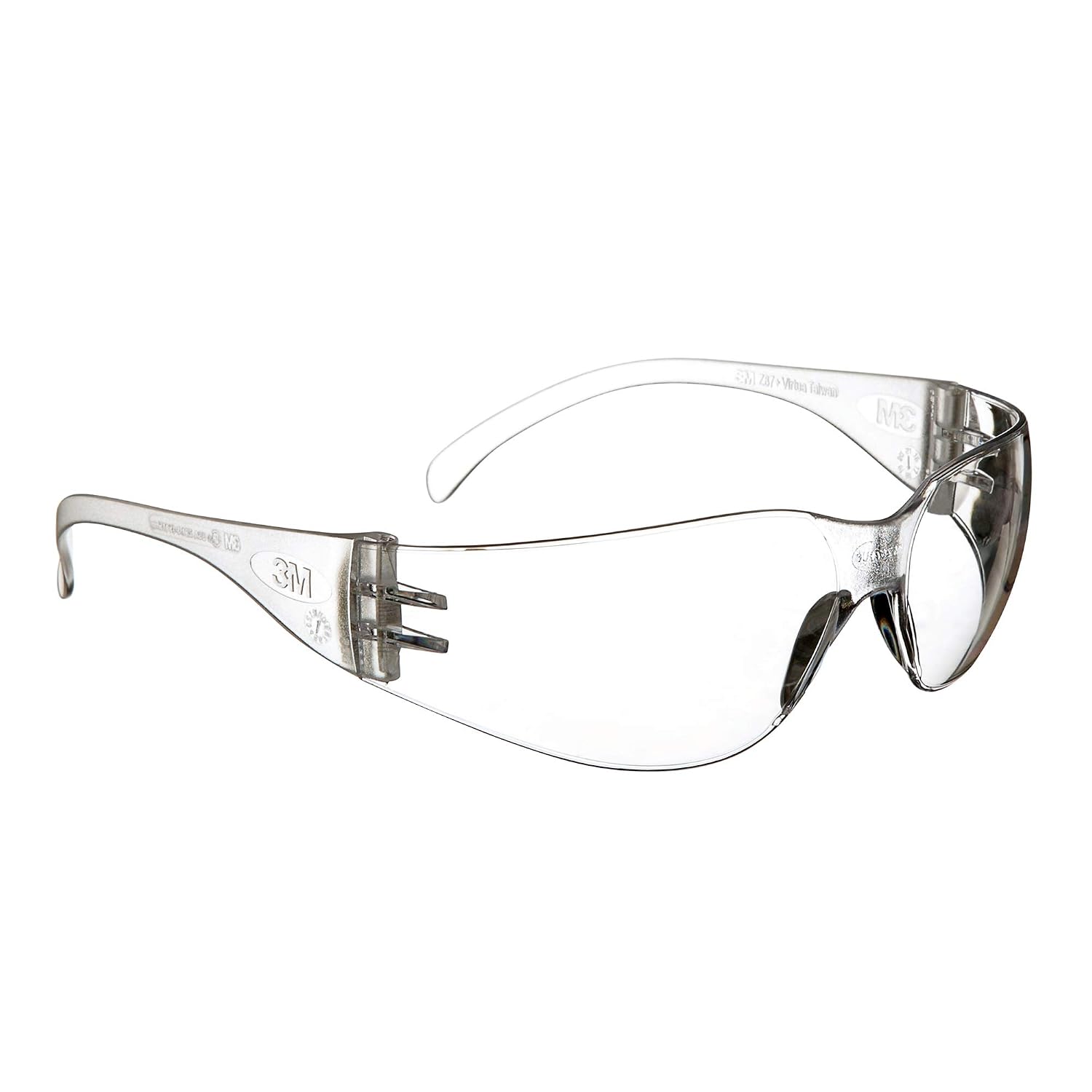
If you’ve ever ordered a case of safety glasses online and felt a quiet uncertainty — are these actually certified, or just shaped like certified ones? — you’re asking exactly the right question. Safety glasses are the most commonly worn piece of personal protective equipment (PPE — gear designed to shield a person from workplace hazards) on any job site, and they’re also among the most frequently bought wrong at scale. ANSI Z87.1 is the certification that matters here: it’s the American National Standard for occupational eye protection, maintained by the American National Standards Institute (ANSI) and the International Safety Equipment Association (ISEA), and it defines the minimum impact resistance, optical clarity, and lens coverage that eyewear must meet to be considered protective. When you’re outfitting two workers, a bad purchase is an inconvenience. When you’re outfitting twenty, it’s a compliance exposure and a genuine safety failure. This guide walks you through how to evaluate bulk safety glasses purchases the way a seasoned site-safety coordinator would — checking the marks, weighing the tradeoffs, and making sure your crew actually wears what you buy.
| EDITOR'S PICK[KleenGuard™ V30 Nemesis™ Safety](https://www.amazon.com/dp/B00982Y3NQ?tag=greenflower20-20)… | Mid-tier3M Safety Glasses | Budget pick[amoolo Clear Safety Glasses Bul](https://www.amazon.com/dp/B0833VW43J?tag=greenflower20-20)… | |
|---|---|---|---|
| Lens tint | Mirror/Smoke | Clear | Clear |
| Anti-fog coating | — | ✓ | — |
| Scratch resistant | — | ✓ | — |
| Quantity | 12 | 20 | 24 |
| Frame color | Black | Clear | — |
| Price | $57.38 | $33.33 | $25.99 |
| See on Amazon → | See on Amazon → | See on Amazon → |
What the Markings on the Frame Actually Tell You
This is the single most important skill in bulk eyewear procurement, and it takes about thirty seconds once you know what to look for. Pick up any pair from a bulk pack and look at the frame and the lens. A legitimately Z87.1-compliant pair will have markings stamped or molded directly into both components — not just printed on a hang tag that’s already in the trash.
Here’s what you’re reading:
- Z87 or Z87+ on the lens: The ”+” mark means the lens has passed the high-impact standard (a 6.35mm steel ball fired at 150 feet per second), not just the basic impact test. For construction, fabrication, grinding, or any task involving projectiles, you want the ”+.” Basic Z87 without the plus covers splash and dust — appropriate for a chemistry lab, less so for a framing crew.
- Z87 on the frame: Confirms the frame itself — not just the lens — has been tested and meets the standard’s retention and structural requirements.
- Manufacturer’s mark: A maker’s code that allows traceability back to the certified product line.
Per ANSI/ISEA Z87.1-2020 — the current revision as of this writing in May 2026 — both the lens and the frame must carry the mark independently. A lens rattling around in an uncertified frame is not a compliant assembly, even if both parts passed tests separately.
The bulk-buy trap: Unbranded “safety glasses” flooding the market frequently carry the Z87 text as decorative printing rather than a molded mark, or stamp the frame only and omit the lens. Safety+Health Magazine’s coverage of eye protection standards has flagged this pattern repeatedly — the visual profile of a compliant pair and a non-compliant pair can look nearly identical at a glance. Your first check on any bulk shipment should be physical lens inspection under decent light, not reliance on the product listing.
The Bulk-Pack Math: Where Cost Per Unit Gets Deceptive
Here’s the decision frame that separates a good bulk buy from a false economy.
By the numbers — typical bulk safety glasses market, 2025–2026:
| Format | Unit cost range | Likely Z87+ status | Useful for |
|---|---|---|---|
| 12-pack unbranded “jobsite” | $0.80–$1.50/pair | Inconsistent — verify each lot | Visitor glasses, very short-duration tasks |
| 12–36 pack name-brand economy (e.g., MCR Safety Checklite, Pyramex S1110SF) | $2–$4/pair | Generally reliable — confirm stamp | High-turnover crew environments, shared use |
| 10-pack mid-tier (e.g., Uvex Stealth OTG, Wiley X Guard Advanced) | $8–$18/pair | Yes, with anti-fog and OTG sizing | Primary protection for trades, production floors |
| Individual premium (Uvex Pheos CX2, Wiley X Gravity) | $18–$45/pair | Yes, with optical-grade coatings | Long-shift, high-glare, precision work |
The unbranded $1.20 pair feels like a deal until you work through the math honestly. If you’re buying 50 pairs for a five-person crew at $1.20, you’ve spent $60 and potentially equipped no one compliantly. Fifty pairs of a verified Pyramex economy line at $3.00 each is $150 — and you have documentation, a brand warranty, and lens stamps you can actually audit. That $90 delta is your compliance insurance.
ISHN’s 2024 coverage of bulk PPE procurement strategies makes the same point from a liability angle: the first question in any OSHA inspection of an eye injury isn’t “how much did the glasses cost?” — it’s “can you demonstrate the equipment met Z87.1?” An invoice from a reputable distributor for a named, certified product line is documentation. A case of unbranded glasses from a marketplace seller is not.
Fit Diversity: The Variable That Kills Compliance on Paper
You can buy perfectly certified glasses and still have a compliance problem, because glasses that don’t fit don’t get worn. This is the part of crew outfitting that even experienced safety coordinators underweight.
The real-world fit variables you need to plan for:
Face width and nose bridge: Most economy safety glasses are designed around a medium male facial geometry that fits roughly 60–70% of adults. Women, workers with narrower faces, and workers from certain ethnic backgrounds with lower nose bridges will find standard-profile glasses sitting poorly — either sliding down constantly or pinching. Pyramex and MCR Safety both publish size ranges on their frames; cross-reference against your crew’s self-reported fit if you’re doing a serious standardization effort.
Glasses-over-glasses (OTG) sizing: If any of your crew wears prescription eyewear and doesn’t have prescription safety glasses, you need OTG (over-the-glasses) certified frames — not standard frames worn over glasses, which voids the Z87 fit geometry. OTG frames are explicitly designed with a recessed lens area to accommodate a prescription frame underneath while maintaining the seal and wrap angle the standard requires. The Uvex Stealth OTG and Pyramex OTG line are commonly specified for this reason. Budget roughly $6–$15 per unit for OTG-rated frames from a name brand.
Facial hair: A full beard doesn’t affect safety glasses the way it affects respirator fit, but it can affect the angle at which wrap-around styles sit — pushing the bottom of the lens away from the face and creating a gap that matters for splash or fine-particle work. For grinding or chemical splash environments, side shields or a goggle-style frame (full peripheral enclosure) addresses this. Goggles rated Z87.1 are available in bulk packs from Pyramex, Radians, and MCR Safety in the $4–$9/pair range.
The practical procurement move: Before finalizing a bulk order, buy one unit from the top two or three candidates and physically pass them around your crew for a day. Track who won’t wear them and why. A glasses style your crew rejects — because it fogs on shift, because it’s uncomfortable with hearing protection, because it looks goofy — provides zero protection no matter what’s stamped on the lens.
Anti-Fog Coatings and Lens Tints: The Spec-Sheet Details That Matter in Practice
Two secondary specs trip up bulk buyers more than any others: anti-fog treatment and lens tint.
Anti-fog: Anti-fog coatings are applied to the interior lens surface and are rated under ANSI Z87.1’s “AF” designation. The key thing to understand is that anti-fog is not a binary — coatings vary significantly in durability and effectiveness. Economy bulk packs frequently have a light anti-fog treatment that lasts through 10–15 cleaning cycles before performance degrades. Mid-tier frames with “HydroShield” (Uvex’s permanent coating, bonded into the lens rather than surface-applied) or Pyramex’s “Fog Ban” coating show significantly better longevity in aggregated user reviews and are regularly noted in professional contractor forums as the key differentiator for crew members doing physical, high-exertion work.
For a five-person crew doing roofing, landscaping, or masonry in warm weather — where fogging is near-constant — the $2–3/pair premium for a better anti-fog lens is not optional. It’s the difference between glasses that get pushed up onto foreheads (no protection) and glasses that stay in place.
Lens tint: Clear lenses are appropriate for indoor work or low-light environments. Gray tint reduces brightness without distorting color, which is the right call for outdoor work in direct sun. Amber/yellow tint enhances contrast in low-light or overcast conditions — preferred by many fabricators and detail workers. Mirrored coatings are primarily for high-sun outdoor environments. The ANSI Z87.1 standard’s “L” designations (e.g., L3, L5) specify luminous transmittance — how much visible light the lens passes — in plain language: a higher L number means a darker lens. For a crew buying a single bulk style, clear is the most universal choice; if your work is primarily outdoor, gray is the better default.
Building the Procurement Checklist
When you’re ready to finalize a bulk order, run through this decision sequence:
If your crew does grinding, cutting, nailing, or any task with projectile risk: Require Z87+ (the ”+” mark on the lens). Do not accept basic Z87 without the plus mark.
If any crew members wear prescription glasses: Allocate a separate line item for certified OTG frames. Don’t assume standard frames worn over prescription glasses creates compliant protection.
If your environment involves heat, exertion, or both: Pay the premium for a permanent anti-fog coating — HydroShield-type or equivalent — rather than a surface-applied treatment.
If you’re buying from an unfamiliar distributor or marketplace seller: Inspect a sample physically before accepting the full order. Check for molded Z87/Z87+ on both lens and frame. An invoice listing a named product from a named manufacturer is your audit trail; an invoice for “safety glasses, qty 50” is not.
If crew turnover is high or shared-use glasses are part of the model: Economy bulk packs in the $2–$4/pair range from verified brands (Pyramex, MCR Safety, Radians) are appropriate. Budget for quarterly replenishment.
If your crew is doing long-shift precision or finishing work: The per-unit cost on premium frames (Uvex Pheos CX2, Wiley X Gravity) pays back in productivity and compliance — workers keep glasses on for eight-hour shifts when the fit and optics are good. Per OSHA’s eye and face protection standard at 29 CFR 1910.133, the employer is responsible not just for providing compliant PPE but for ensuring it is used — which means comfort and fit are regulatory requirements, not amenities.
The right bulk buy isn’t the cheapest compliant pair. It’s the most affordable pair your crew will actually keep on their faces, stamped with a mark you can defend if something goes wrong.