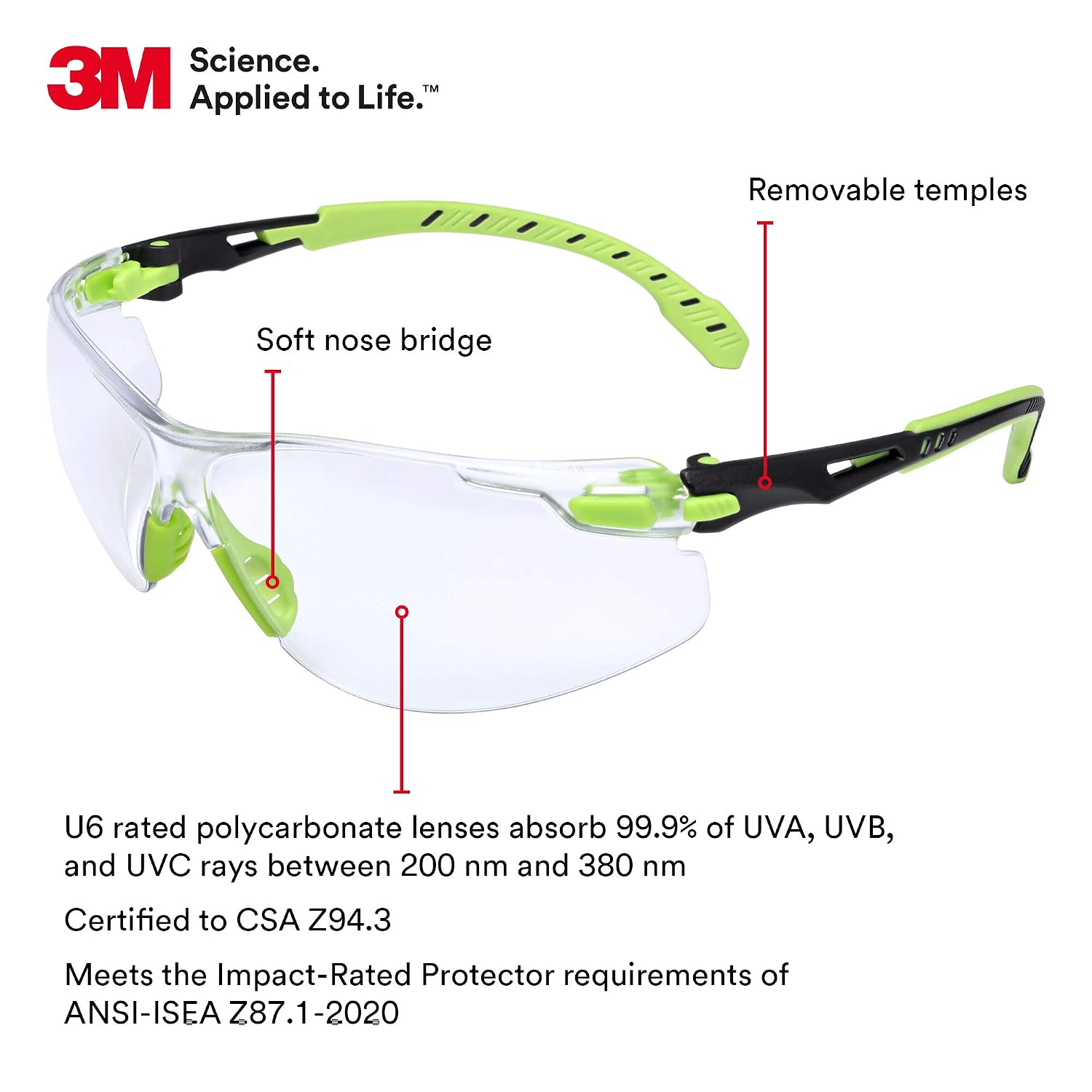
If you’ve ever flipped a pair of safety glasses over to look at the lens markings and seen something like Z87.1+ D3 U6 L stamped on the bridge, you’re not alone in wondering what any of that actually means. Those codes are part of a standardized marking system defined by ANSI/ISEA Z87.1 — a voluntary safety standard (meaning manufacturers adopt it to certify their products meet tested performance thresholds) published jointly by the American National Standards Institute and the International Safety Equipment Association. Think of it as a nutrition label for your eye protection: every symbol tells you something specific about what the lens was tested to handle. Get the codes right, and you’re buying protection that matches your hazard. Get them wrong, and you might be wearing $80 glasses that weren’t rated for the one thing your shop throws at your face all day.
This guide is for the buyer who already knows they need ANSI-rated eyewear but wants to stop guessing at the alphabet soup. We’ll decode the plus sign, the impact classes, the optical grades, and every major hazard suffix — with a decision framework at the end so you can match markings to your actual work.
The Plus Sign: The Most Important Mark on Any Lens
Let’s start with the one that most buyers overlook. When you see Z87 stamped on a lens, that means the frame or lens passed the basic Z87.1 impact test — a 1-inch steel ball dropped from 50 inches. Adequate for light-duty use, but the bar is not high.
When you see Z87+ (with a plus sign), that means the product passed the high-impact test — a 1/4-inch steel ball fired at 150 feet per second at the lens, plus a separate test where a pointed projectile is dropped from height onto the frame. Per the ANSI/ISEA Z87.1-2020 standard, only products that clear both the high-velocity and high-mass tests earn the plus designation.
In plain English: Z87 is the minimum. Z87+ is what you want if there’s any real projectile risk in your environment — grinding, nailing, routing, turning metal, demolition work. Safety+Health Magazine’s coverage of the Z87.1 standard consistently emphasizes that the plus designation is the practical dividing line for industrial use versus light-duty or lab settings.
The practical tradeoff: lenses rated Z87+ are typically thicker (polycarbonate at 2mm or more, or Trivex construction) and will cost more. Wiley X’s Gravity, for example, is built around a ANSI Z87.1+ high-impact frame with 2.4mm polycarbonate lenses — that thickness is what buys you the rating, not just a logo.
Impact Classes: D3, D4, D5, and What They Protect Against
Beyond the plus sign, the D-suffix codes tell you what specific hazard the lens resists. These are not redundant — each one was tested against a different threat.
| Code | Hazard | Typical Use Case |
|---|---|---|
| D3 | Chemical splash and droplets | Chemical handling, spray finishing, parts washing |
| D4 | Dust (coarse particulate) | Woodworking, drywall, concrete grinding |
| D5 | Fine dust | Fine sanding, fiberglass, pharmaceutical environments |
| D6 | Welding — shade-matched filter lenses | Torch work, MIG/TIG at appropriate shade number |
D3 is the one most buyers under-specify. It requires the lens to have a sealed or close-fitting frame that prevents liquid from reaching the eye from splash or a fine mist. A standard open-frame spectacle — even a Z87+ one — is not D3 rated. If you’re doing any spray work, solvent cleaning, or chemical mixing, you need either goggles or a spectacle with a D3 seal. OSHA’s Eye and Face Protection regulation (29 CFR 1910.133) specifically notes that splash hazards require a device that prevents penetration around the lens, which is the functional requirement behind D3.
D4 vs. D5 is the distinction that matters for woodworkers and finishers. D4-rated eyewear resists larger particulate — the chips and shavings from a router or planer. D5 goes further, requiring the device to seal against fine dust that can penetrate around a standard frame. If you’re sanding MDF (medium-density fiberboard, which generates extremely fine particles) or working with fiberglass insulation, D5 goggles are the correct call. Most open-frame safety glasses, including premium spectacles like the Uvex Pheos CX2, are not rated D4 or D5 because they’re not sealed — that’s not a deficiency in the product, it’s just the honest description of what a spectacle is built for.
Optical Classes and UV Ratings: U6, L, and the Numbers That Affect Your Vision
The optical performance markings are where a lot of buyers leave real quality on the table. These codes tell you how accurately the lens transmits and filters light.
U-ratings (UV protection): The U followed by a number indicates the ultraviolet light filtration scale, with higher numbers meaning greater UV blockage. A U6 rating means the lens blocks UV light up to ANSI’s scale level 6, which corresponds to blocking essentially 99.9% of UV-A and UV-B radiation. For outdoor work — roofing, landscaping, concrete finishing — U6 should be your floor. Per NIOSH’s Eye Safety resources, cumulative UV exposure is a significant occupational hazard that is entirely preventable with proper lens selection.
L-ratings (visible light filtration): The L followed by a number (e.g., L5, L8) indicates the lens’s luminous transmittance — how much visible light it lets through. Higher L numbers mean a darker tint. L3 might be a light gray lens suitable for moderate outdoor light; L8 or above is suitable for bright sunlight or arc welding observation. This is particularly relevant for auto-body professionals doing outdoor paint work: too dark a lens indoors creates its own hazard (reduced visibility), while an unrated clear lens outdoors causes fatigue and squinting that affects work quality.
Optical class (1 or 3): Z87.1 also defines two optical clarity classes. Class 1 is the higher standard — minimal prismatic distortion, suitable for precision work. Class 3 is acceptable for general protection where optical clarity is less critical. On most quality spectacles, you’ll see “1” stamped with the other codes. If you’re doing fine finish carpentry, electrical work, or any task where you’re reading small measurements, Class 1 optical rating matters.
By the Numbers
- Z87 basic impact: 1-inch steel ball, 50-inch drop
- Z87+ high-impact: 1/4-inch ball at 150 fps + pointed projectile high-mass test
- U6: Blocks ~99.9% of UV-A and UV-B (ANSI scale maximum for eyewear)
- D3: Requires sealed or indirect-vent construction to block splash
Fit Realities: Where Ratings Meet Faces
Here’s the gap the marking system doesn’t address: a lens with every correct suffix still fails if it doesn’t seal to your face. This is the real-world friction point that no certification covers.
Facial hair: D3 and D5 goggles rely on a perimeter seal. Operators with full beards — or even a few days of growth — consistently report reduced seal quality, as noted in aggregated buyer reviews across industrial safety distributors. If you have facial hair and need D3 splash protection, look specifically for indirect-vent goggles with a foam gasket rather than a rigid rubber seal; foam conforms better to irregular surfaces.
High cheekbones and Asian fit: Standard spectacle frames are sized for a median face model that doesn’t reflect the full population. Brands like Uvex and Honeywell have published “Asian fit” or “universal fit” variants of some lines specifically because standard bridge widths and nose piece profiles create gap problems that defeat even a Z87+ spectacle’s side impact coverage. ISHN’s coverage of eyewear fit variability has flagged this as an under-discussed issue in safety audits.
Prescription compatibility: If you need corrective lenses, your options are: (1) OTG — over-the-glass — frames rated Z87+ that fit over your Rx frames, (2) Rx inserts in a goggle system, or (3) prescription safety lenses ground to Z87+ in a certified safety frame. OTG is the fastest solution but adds fogging risk. Custom Rx safety lenses take lead time but eliminate the OTG bulk. For anyone in a production environment wearing safety glasses 6+ hours a day, the comfort delta between an OTG solution and a properly fitted Rx safety spectacle is significant — and worth the one-time investment.
Reading the Full Stamp: Putting It Together
A fully marked lens might read: Z87+ D3 U6 L 1
Decoded left to right: passed high-impact testing (Z87+), splash/droplet resistant (D3), UV protection at scale level 6 (U6), has a visible-light filter tint (L — the specific number would follow), and meets optical Class 1 clarity. That’s a complete picture of the product’s tested performance in six characters.
Compare that to a lens marked only Z87 with no suffixes: basic impact, no splash rating, no stated UV protection, unknown optical class. Not necessarily a bad product for its intended use — but a completely different tool.
The Decision Framework: If X, Then Y
Before you finalize any eyewear purchase, map your hazard profile to the suffix list:
- If you grind metal, cut wood, or use a nail gun: Z87+ is non-negotiable. The plus sign is the only mark that confirms the lens was tested against ballistic-grade projectiles.
- If you spray finishes, handle chemicals, or work around liquids: D3 is required — and that means goggles, not open spectacles. A premium spectacle without a D3 rating is the wrong tool regardless of price.
- If you work outdoors more than two hours a day: U6 rated lenses are the standard. Pair with an appropriate L-rating for your light conditions.
- If you’re doing detail work or reading fine measurements: Verify optical Class 1 on the lens stamp. Class 3 saves a few dollars and costs you clarity.
- If fit is a concern (facial hair, high cheekbones, Rx needs): Treat fit as a first-order specification, not an afterthought. A correctly rated lens that doesn’t seal is worse than a modestly rated lens that fits — because it creates a false sense of protection.
The marking system is genuinely useful once you know what to look for. The ANSI/ISEA Z87.1-2020 standard makes every one of these codes testable and auditable — which means when you’re comparing two products side by side, the stamp is a more reliable guide than the marketing copy above it. Use both, but trust the stamp.